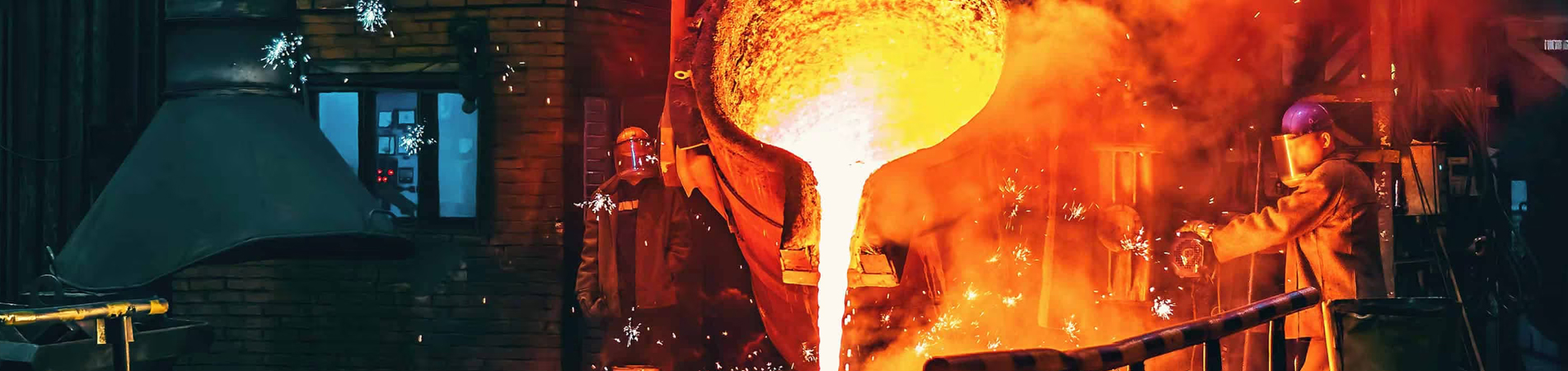
Funda de sílice de alta calidad para protección contra temperaturas extremas.
En lo que respecta a la protección térmica, llega un punto en el que simplemente añadir otra capa de fibra de vidrio común ya no es la mejor solución.
Una manguera hidráulica que discurre junto a la carcasa de un horno, un cable que pasa por un colector de escape o una línea de instrumentación que atraviesa una zona de producción de alta temperatura pueden permanecer mecánicamente intactos mientras que la temperatura ambiente se desplaza progresivamente más allá del rango de seguridad de los materiales de protección convencionales.
Aquí es donde unfunda de sílice de alta calidadse vuelve relevante.
El revestimiento con alto contenido de sílice está diseñado para aplicaciones en las que el componente protegido debe permanecer flexible, el espacio disponible no favorece el aislamiento rígido y la exposición térmica es lo suficientemente severa como para justificar una construcción de fibra rica en sílice.
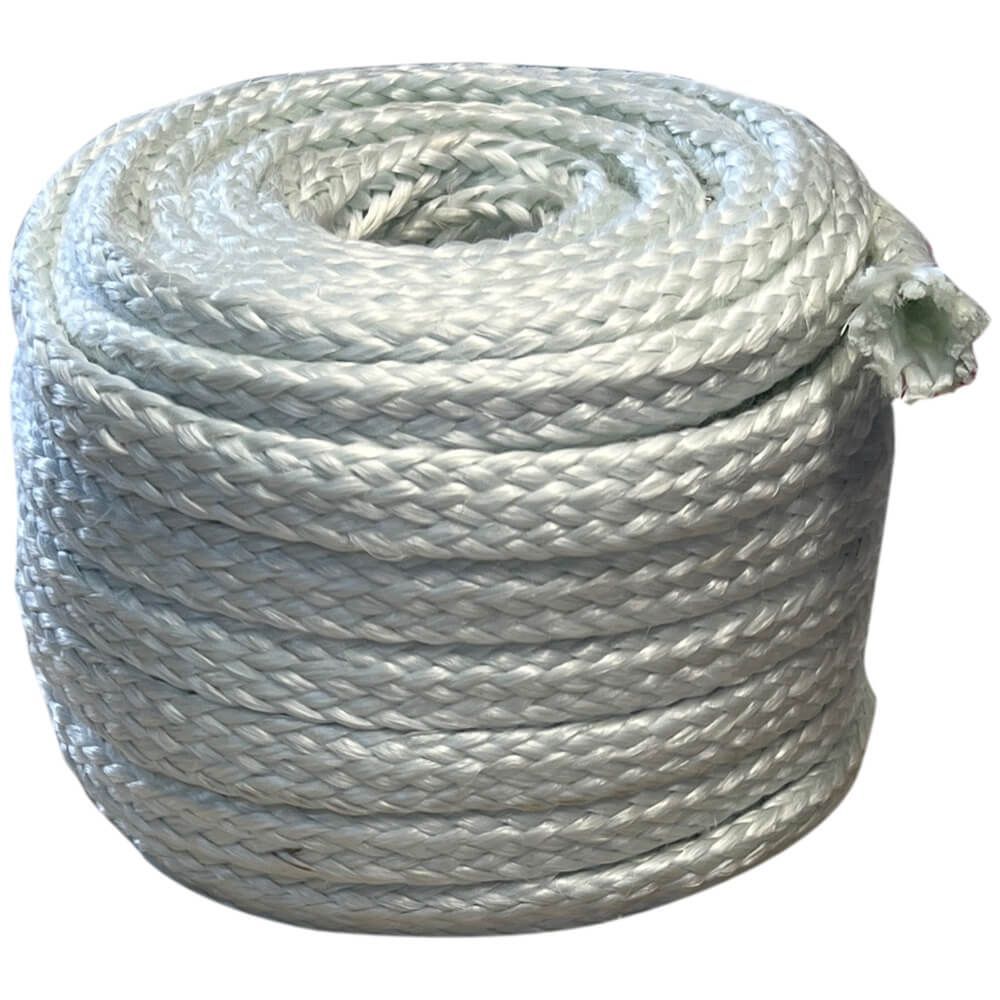
BSTFLEX fabricamanguitos de sílice y manguitos de sílice de alta temperaturaPara la protección de mangueras, cables, alambres, tuberías y equipos industriales.
¿Cuándo una aplicación entra en territorio de alto contenido de sílice?
La respuesta rara vez viene determinada por un solo valor de temperatura.
Dos máquinas pueden tener la misma temperatura nominal de funcionamiento y, aun así, someter una funda protectora a cargas muy diferentes.
Consideremos estas dos situaciones.
En el primer caso, un cable se coloca a 150 mm de un tubo de escape caliente, con un flujo de aire constante que atraviesa el compartimento.
En el segundo caso, una manguera hidráulica se coloca a 15 mm de un panel de acceso al horno y permanece en la misma ubicación durante todo un turno de producción.
Ambos componentes pueden estar expuestos al calor, pero la intensidad, la duración y el modo de transferencia de calor son diferentes.
Una funda de fibra de sílice de alto contenido se convierte en una opción seria cuando se presenta una o más de las siguientes condiciones:
- La fuente de calor funciona a temperaturas superiores a las de las aplicaciones normales de fibra de vidrio.
- El calor radiante permanece presente durante largos períodos
- El componente protegido no se puede alejar más de la fuente de calor.
- Se requiere una barrera textil flexible en lugar de un aislamiento rígido.
- La instalación incluye hornos, equipos de extracción de humos o maquinaria de procesamiento térmico.
- El diseñador necesita un margen de temperatura adicional por encima de una solución convencional de fibra de vidrio.
- La funda debe soportar ciclos repetidos de calentamiento y enfriamiento.
Por qué la fibra de sílice de alto contenido tiene un rendimiento diferente al de la fibra de vidrio estándar.
La diferencia clave no reside en el color de la manga ni en el hecho de que ambos materiales puedan tejerse para formar textiles. Se trata de la composición química de la fibra.
La fibra de vidrio convencional ya es un material térmico eficaz y sigue siendo adecuada para miles de aplicaciones industriales. La fibra con alto contenido de sílice se selecciona cuando se requiere un mayor contenido de sílice para obtener una mejor estabilidad ante exposiciones térmicas más severas.
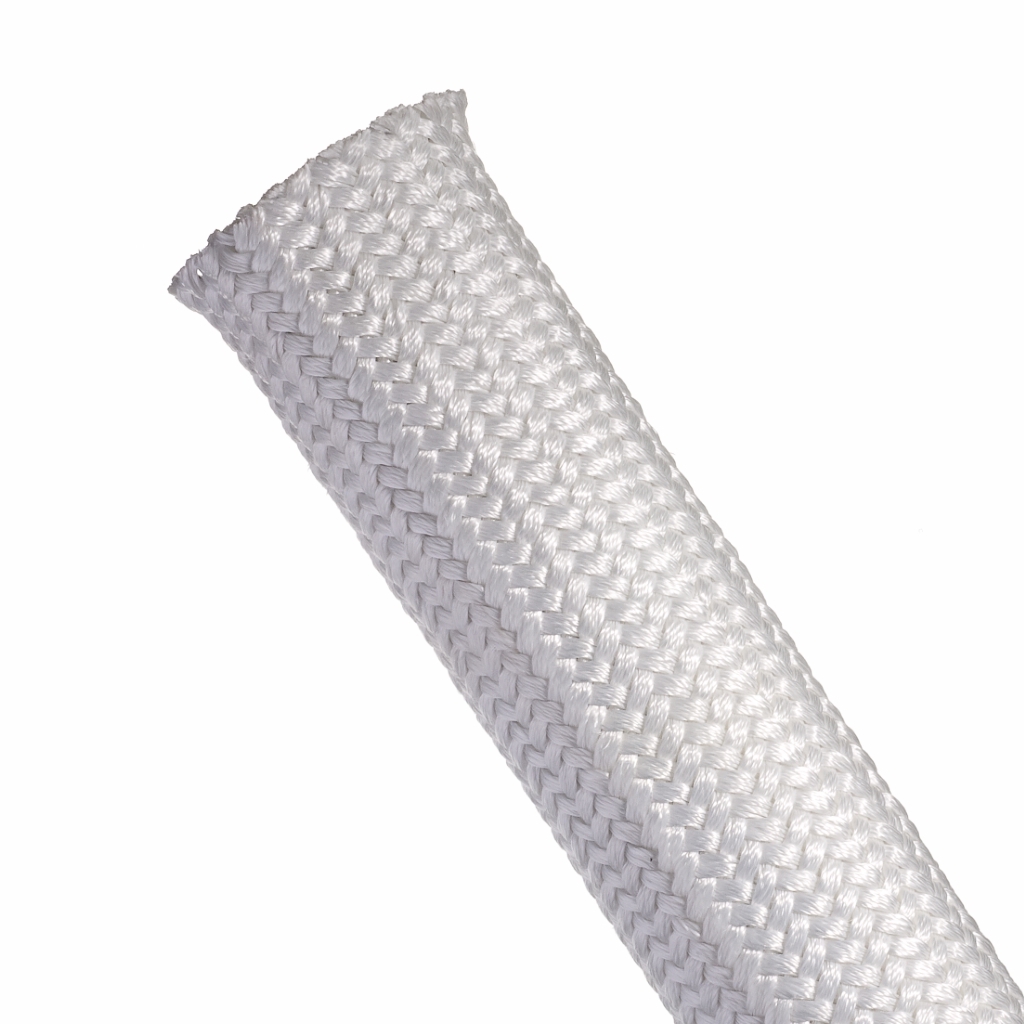
Tras un procesamiento adecuado, la fibra rica en sílice aún puede convertirse en hilo y luego transformarse en protección tubular.
Esto proporciona a los ingenieros una combinación inusual:
- capacidad de temperatura de la fibra mineral
- instalación flexible
- Espacio de instalación reducido en comparación con muchos sistemas rígidos.
- Compatibilidad con mangueras curvas y rutas de cables.
- disponibilidad en estructuras trenzadas y texturizadas
Afunda de fibra de sílice de alta calidadPor lo tanto, ocupa una posición importante entre los manguitos flexibles de uso general y los sistemas de aislamiento refractario mucho más pesados.
La temperatura de la fuente de calor no es la temperatura de la manguera.
Esta distinción es importante en casi todos los proyectos de mangas para altas temperaturas.
Si una superficie de escape está funcionando a 800 °C, no significa automáticamente que la manguera situada cerca también esté expuesta a 800 °C.
Del mismo modo, que un horno tenga una temperatura de cámara de 1000 °C no significa que todos los cables que se encuentren fuera del cuerpo del horno deban estar fabricados con un material apto para contacto directo y continuo a 1000 °C.
Para la selección de la funda, hay varias temperaturas diferentes que conviene diferenciar:
| Punto de temperatura | Lo que representa | Por qué es importante |
|---|---|---|
| Temperatura de la fuente de calor | Temperatura de los gases de escape, la pared del horno, la tubería o el equipo de proceso. | Define la gravedad de la fuente térmica. |
| Temperatura ambiente local | Temperatura del aire que rodea la manga | Importante para la exposición continua |
| Temperatura de la superficie exterior de la manga | Temperatura percibida directamente por el tejido. | Relevante para la durabilidad del material |
| Temperatura debajo de la manga | Temperatura que llega al componente protegido | Fundamental para el rendimiento real de la protección. |
| Límite de temperatura del componente | Temperatura máxima admisible de la manguera, cable, sello o alambre. | Define el objetivo real de ingeniería |
Una selección correctafunda de sílice de alta temperaturaDebe evaluarse en función de la trayectoria térmica completa, no solo en función del valor más alto especificado en el equipo.
El calor radiante suele ser el problema oculto.
Muchos fallos en mangueras y cables se producen sin contacto directo con una superficie caliente.
El calor radiante se propaga a través del espacio abierto. Un turbocompresor, un colector, la puerta de un horno, un molde calentado o un componente metálico incandescente pueden irradiar energía continuamente hacia los equipos cercanos.
Por eso, una manguera puede mostrar signos de envejecimiento térmico incluso cuando el instalador puede ver claramente un espacio de aire entre la manguera y la fuente de calor.
El revestimiento con alto contenido de sílice crea una barrera térmica alrededor del componente que recibe dicha radiación.
El resultado depende de varias variables:
- distancia de la fuente de calor
- temperatura superficial de la fuente
- ángulo de exposición
- espesor de la manga
- movimiento del aire
- duración de la exposición
- temperature limit of the component beneath the sleeve
Reducing radiant exposure can be particularly valuable around hydraulic hose covers, electrical cable jackets and polymer tubing, all of which may have considerably lower temperature limits than the surrounding metal equipment.
Continuous Heat and Short Heat Peaks Should Not Be Treated the Same Way
A common purchasing mistake is comparing sleeve materials only by the highest temperature printed on a datasheet.
Maximum temperature and continuous operating temperature serve different purposes.
A material may tolerate a severe temperature for a short event without being the preferred choice for thousands of hours at that same level.
For high silica sleeve projects, specify at least:
- normal operating temperature
- maximum expected temperature
- duration of the maximum temperature
- number of thermal cycles
- whether the sleeve cools completely between cycles
This information is more useful than simply writing "need 1000°C sleeve" on an inquiry.
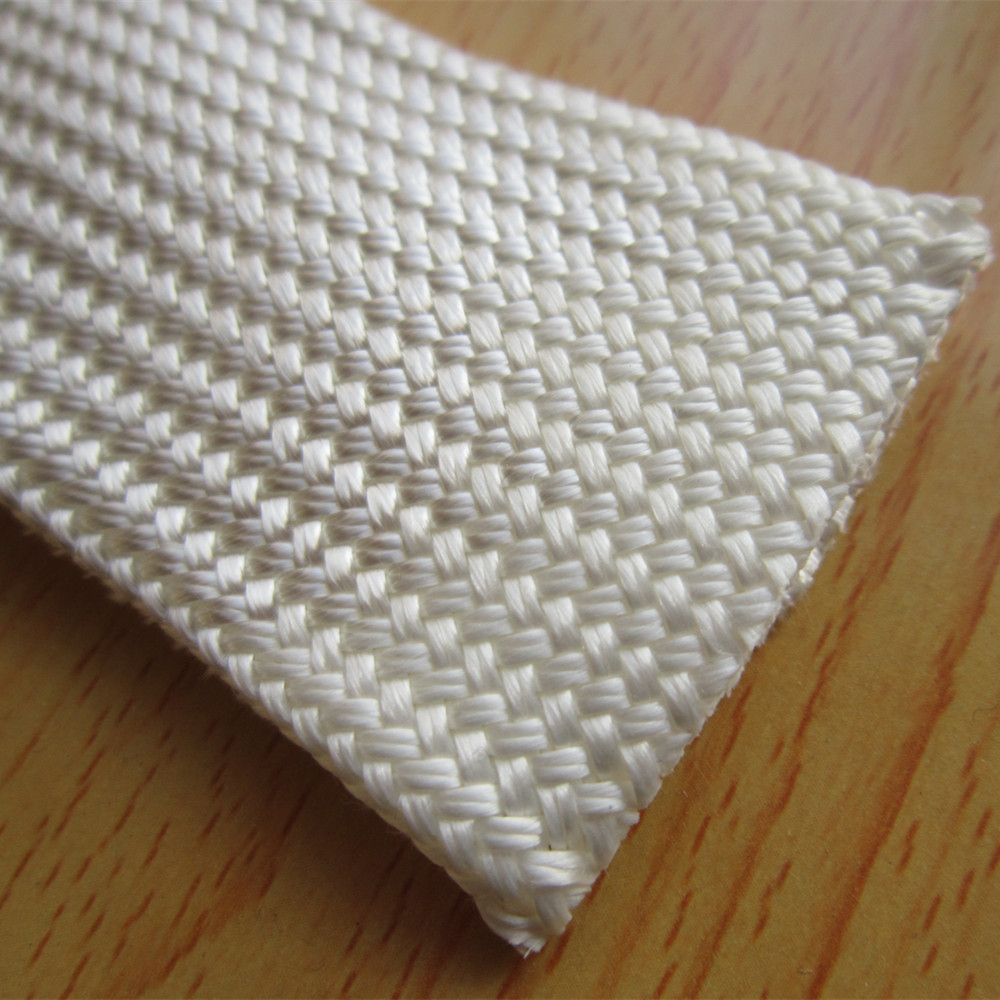
Braided High Silica Sleeve for Compact Thermal Protection
Braiding is particularly useful when the protected component moves, bends or passes through a restricted area.
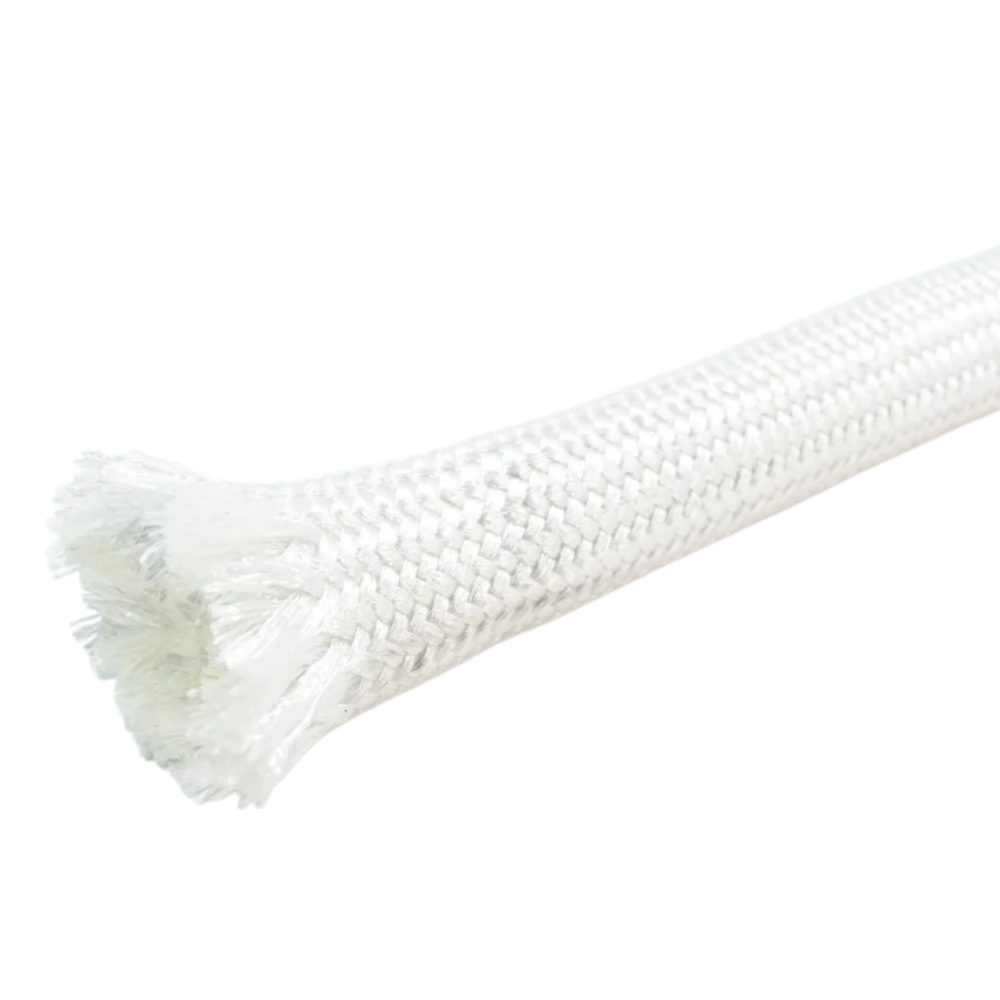
Multiple silica yarns cross around the circumference of the sleeve, forming a coherent tubular structure without turning the material into a rigid pipe.
The construction can follow curved hose and cable routes while remaining stable during handling.
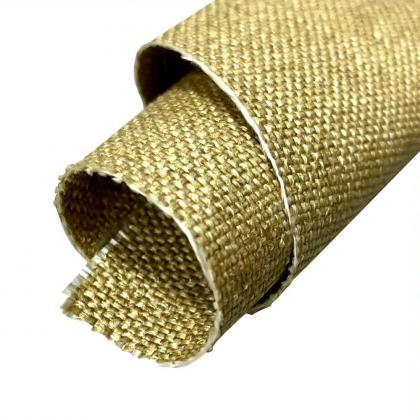
BSTFLEX manufactures aHigh Temperature Resistant Braided Silica Sleevefor severe thermal environments.
The current specification for this particular braided construction lists a maximum temperature resistance of up to 1,200°C.
Typical candidates for braided construction include:
- hydraulic hoses
- electrical cables
- wire bundles
- sensor lines
- small process tubing
- engine components
- lines routed beside exhaust equipment
Where More Insulation Volume Is Needed
Not every installation benefits from the most compact sleeve possible.
Stationary pipework, furnace service connections and some industrial hose assemblies may benefit from a bulkier textile structure.
Texturized silica yarn introduces additional fiber volume into the sleeve wall. That structure can create more trapped air within the textile and increase the physical distance through which heat must pass.
For this type of requirement, BSTFLEX also supplies aHeat Insulation Texturized Silica Sleeve.
The decision between compact braided construction and bulkier insulation construction should be based on the installation rather than on product appearance.
High Silica Sleeve Around Hydraulic Systems
Hydraulic systems create a difficult protection problem because the hose often has to remain flexible while operating close to machinery that generates substantial heat.
Common examples include:
- steel production equipment
- die-casting machinery
- foundry equipment
- forging lines
- industrial presses
- mobile diesel machinery
- furnace service systems
- heavy manufacturing equipment
When a hydraulic line is exposed to severe radiant heat, the outer rubber cover may age faster even though hydraulic fluid temperature remains within specification.
A high silica sleeve can be installed as an external textile barrier around the hose.
For this application, engineers should check:
| Item to Check | Reason |
|---|---|
| Hose outside diameter | Determines basic sleeve size |
| Ferrule or fitting diameter | May control installation clearance |
| Minimum bend radius | Prevents an oversized wall construction from restricting movement |
| Heat-source distance | Strongly affects radiant heat load |
| Hose cover temperature limit | Defines the protection target |
| Movement and abrasion | Affects construction choice and expected service life |
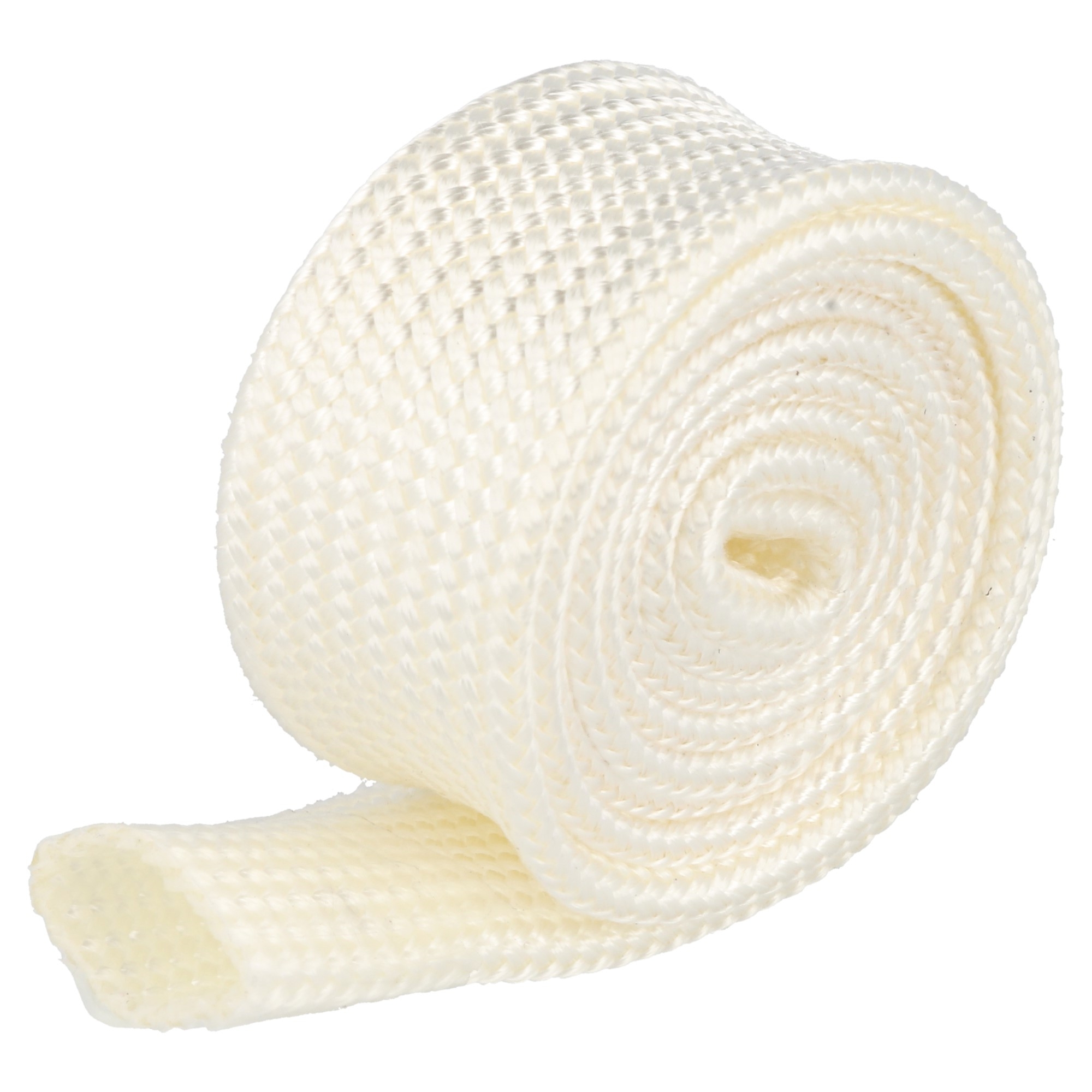
High Silica Sleeving Near Exhaust Equipment
Exhaust systems are one of the clearest examples of concentrated heat inside a limited space.
Diesel engines, turbochargers, exhaust manifolds, generator sets and industrial engines may place wiring, hoses and instrumentation only a short distance from hot exhaust components.
Ahigh silica sleeve for exhaust-adjacent protectioncan be installed around the sensitive component rather than around the exhaust itself.
This distinction changes the design objective.
When the sleeve surrounds a cable or hose near an exhaust:
The objective is protection.
When insulation surrounds the exhaust pipe directly:
The objective is heat containment.
The same material family may appear in both systems, but the required wall structure, installation method and thermal calculation can be different.
Furnace Applications: Look Outside the Chamber
High silica sleeve is often useful around furnace equipment without ever entering the hottest part of the furnace.
External systems still face demanding temperatures around:
- burner assemblies
- furnace doors
- inspection ports
- thermocouple connections
- electrical service cables
- hydraulic and pneumatic lines
- process piping
These components may be exposed to long-duration heat shift after shift.
For such projects, the actual measured temperature at the sleeve location is normally more valuable than the furnace's advertised chamber temperature.
Foundry and Casting Equipment
Foundry environments combine radiant heat, hot equipment, mechanical movement and the possibility of molten-metal exposure.
These conditions should not be reduced to one generic "high-temperature" requirement.
A high silica fiber sleeve may be appropriate for protecting hoses and cables from furnace radiation and nearby hot surfaces.
However, if direct molten-metal splash is expected, the project needs a separate hazard assessment.
The temperature resistance of the fiber alone does not prove that every sleeve construction will safely shed molten aluminum, iron or steel.
For splash exposure, information should include:
- metal type
- molten-metal temperature
- expected splash quantity
- angle of impact
- duration of contact
- required surface coating or treatment
This distinction prevents high-temperature resistance from being confused with molten-metal performance.
Steel Mill Applications
Hydraulic hose and electrical cable often have to run through hot zones in steel processing plants.
Potential areas include:
- continuous casting equipment
- rolling mills
- reheating furnace areas
- hot strip processing
- ladle equipment
- material handling systems
In these environments, temperature is often only one part of the problem.
A sleeve may also encounter scale, abrasion, vibration and mechanical contact. The complete protective system should therefore be selected around the real location rather than using high silica fiber as a universal solution.
High Silica Sleeve for Electrical Cable and Instrumentation
Electrical systems frequently contain materials whose thermal limits are much lower than those of nearby metal equipment.
Insulation compounds, connectors and sensor interfaces may be the weakest points.
A high silica sleeve can provide an external thermal barrier around:
- power cables
- sensor wiring
- thermocouple leads
- control cables
- engine wiring harnesses
- furnace instrumentation
- generator wiring
It is important to separate two specifications.
Thermal insulation:reducing heat reaching the cable.
Electrical insulation:preventing electrical conduction or providing a defined dielectric rating.
A silica sleeve selected for heat protection should not automatically be assigned an electrical dielectric rating unless that performance is independently specified and tested.
Pipe and Tube Insulation With High Silica Fiber
Small-diameter process piping can be awkward to insulate with conventional removable blankets or fabricated metal jackets.
Flexible silica sleeving can offer a practical alternative where the geometry permits tubular installation.
Typical examples include:
- hot gas lines
- generator exhaust connections
- industrial engine tubing
- heated process pipes
- laboratory furnace connections
- high-temperature instrumentation tubing
Direct pipe insulation should be evaluated according to heat loss and desired outer-surface temperature, not only according to whether the silica fiber survives the pipe temperature.
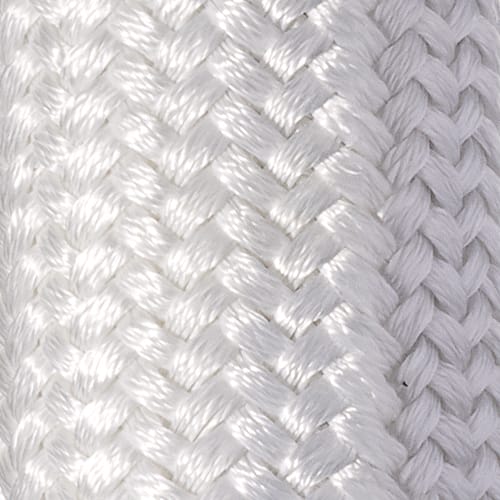
How Much Temperature Margin Should Be Allowed?
Running any thermal protection material continuously at the edge of its maximum published capability is rarely the preferred engineering approach.
Real equipment does not remain perfectly constant.
Temperature spikes occur. Airflow changes. Production rates increase. Exhaust regeneration events raise local heat. Deposits accumulate. Hoses move closer to hot surfaces. Maintenance changes routing.
A practical design therefore includes thermal margin.
The amount of margin depends on:
- severity of failure if protection is lost
- accuracy of available temperature data
- thermal cycling frequency
- continuous versus intermittent exposure
- airflow stability
- distance from the heat source
- expected service life
A critical hydraulic line beside a furnace deserves a more conservative approach than a non-critical cable exposed only during occasional equipment warm-up.
High Silica Sleeve vs Adding More Fiberglass Layers
When temperatures rise, it can be tempting to keep increasing the thickness of an existing fiberglass solution.
That approach has practical limits.
| Engineering Question | Additional Fiberglass | High Silica Sleeve |
|---|---|---|
| Need more insulation thickness? | Can help | Can help depending on construction |
| Fiber temperature capability already becoming limiting? | Additional thickness does not change base fiber chemistry | Higher-silica fiber may provide greater thermal margin |
| Limited installation diameter? | More layers increase bulk | Can provide another material option without simply stacking layers |
| Need flexible hose protection? | Possible | Well suited in braided constructions |
| Extreme industrial thermal environment? | Application dependent | Often considered when conventional glass approaches its limit |
The correct decision is not "silica is always better." It is whether moving to a different fiber system solves the actual thermal limitation more effectively than simply adding material thickness.
High Silica Does Not Solve Every Hazard
A high temperature rating can create a false sense that one sleeve can handle every severe industrial environment.
That is not the case.
High silica fiber does not automatically provide:
- oil sealing
- waterproofing
- chemical resistance to every fluid
- high abrasion resistance against sharp metal edges
- electrical dielectric certification
- molten-metal splash resistance
- flame resistance for every specified test method
If the application includes several hazards at once, a different coating, outer layer or sleeve system may be required.
The best high-temperature protection system is often selected by identifying the dominant failure mechanism first.
Braided High Silica Sleeve or Texturized Silica Sleeve?
| Project Condition | Preferred Direction to Evaluate |
|---|---|
| Flexible hydraulic hose | Braided silica sleeve |
| Tight engine compartment | Compact braided construction |
| Electrical cable routing | Braided silica fiber sleeve |
| Stationary hot pipe | Texturized or heavier insulation construction |
| Need increased textile insulation volume | Texturized silica sleeve |
| Frequent bending | Evaluate braided construction |
| Long-duration stationary thermal insulation | Evaluate wall thickness and texturized construction |
These are selection directions, not fixed rules. Diameter, temperature and installation geometry can change the preferred solution.
Information Needed for an Extreme-Temperature Sleeve Project
A useful technical inquiry can often be summarized on one page.
For BSTFLEX to evaluate a high silica sleeve application, provide the following information whenever available:
- Protected component:hose, cable, wire, pipe or another assembly.
- Outside diameter:including the largest fitting or connector the sleeve must pass over.
- Heat source:exhaust, furnace, engine, heated pipe, molten process or other equipment.
- Heat-source temperature:normal and peak.
- Distance from heat source:particularly important for radiant heat.
- Local ambient temperature:where known.
- Maximum allowable component temperature:if specified by the hose, cable or equipment manufacturer.
- Exposure duration:continuous, cyclic or short peak.
- Movement:stationary, vibrating, flexing or repeatedly bending.
- Other hazards:oil, abrasion, molten splash, weather or chemical exposure.
- Required length and quantity.
Photographs, drawings and actual temperature measurements can make product selection considerably more accurate.
BSTFLEX High Silica Sleeve Options
BSTFLEX supplies silica sleeving for industrial thermal protection through different textile constructions.
High Temperature Resistant Braided Silica Sleeve
Designed for flexible thermal protection where a mechanically stable tubular braid is preferred. Applications include hoses, cables, wiring and equipment positioned close to severe heat sources.
View Braided High Silica Sleeve
Heat Insulation Texturized Silica Sleeve
Designed for applications where a bulkier silica textile structure and increased insulation volume are desirable around pipes, hoses and industrial equipment.
View Texturized Silica Insulation Sleeve
For the complete product family, visit theSilica Sleevecategory.
Questions Engineers Frequently Ask About High Silica Sleeve
What is a high silica sleeve?
A high silica sleeve is a flexible tubular thermal protection product manufactured from silica-rich fiber yarn. It is generally selected when hoses, cables, wires or pipes require protection in thermal conditions more severe than those normally handled by conventional fiberglass sleeving.
Where is high silica sleeving normally used?
Typical locations include exhaust systems, furnaces, foundries, steel plants, engines, heat-treatment equipment, industrial ovens and machinery containing high-temperature hoses, cables or piping.
Can high silica sleeve be installed over a hydraulic hose?
Yes. Braided silica sleeves can be used as external thermal protection for hydraulic hoses exposed to radiant or ambient heat. Hose diameter, fittings, bend radius, abrasion and the actual thermal environment should be reviewed before selection.
Can high silica sleeve be used around exhaust components?
Yes. It can protect cables, hoses and wiring positioned near exhaust pipes, manifolds and turbochargers. Direct insulation of an exhaust pipe is a different application and should be evaluated according to pipe temperature, diameter and required heat containment.
Does high silica sleeve work against radiant heat?
Silica sleeving can form part of a radiant-heat protection system by creating a high-temperature textile barrier between the heat source and the protected component. Actual performance depends on distance, sleeve construction, exposure time, airflow and source temperature.
Is maximum temperature the same as continuous temperature?
No. Maximum or peak temperature and continuous operating temperature describe different exposure conditions. Product selection should consider both values and the duration of each exposure.
Is high silica sleeve always better than fiberglass sleeve?
No. Standard fiberglass remains a cost-effective material where its thermal capability is sufficient. High silica fiber is generally considered when greater temperature capability or additional thermal margin is required.
Which is better, braided or texturized silica sleeve?
Braided construction is often preferred where compactness, flexibility and dimensional stability are important. Texturized construction can be considered when greater textile volume and thermal insulation are priorities.
What size high silica sleeve should I order?
Utilice la dimensión exterior más grande que deba cubrir el manguito, no solo el tamaño nominal de la manguera o el cable. También deben tenerse en cuenta los racores, los conectores y el método de instalación.
¿Puede BSTFLEX fabricar fundas de sílice a medida?
Sí. BSTFLEX puede evaluar el diámetro interior, la longitud, la construcción, el embalaje y otros requisitos OEM personalizados según la aplicación.
Especifique el problema de calor antes de especificar la funda.
Para proyectos que implican temperaturas extremas, la solicitud de cotización más útil contiene más información que el diámetro de la manga y un valor de temperatura.
Envíe a BSTFLEX las dimensiones del componente, la temperatura de la fuente de calor, la distancia a la fuente de calor, el límite de temperatura requerido del componente, el ciclo de funcionamiento y cualquier riesgo mecánico o ambiental. Nuestro equipo podrá evaluar si una funda trenzada de sílice de alta resistencia, una funda aislante de sílice texturizada u otra construcción de protección térmica es más apropiada.
Solicite un presupuesto para una funda de sílice de alta calidad.


 Network IPv6 compatible con