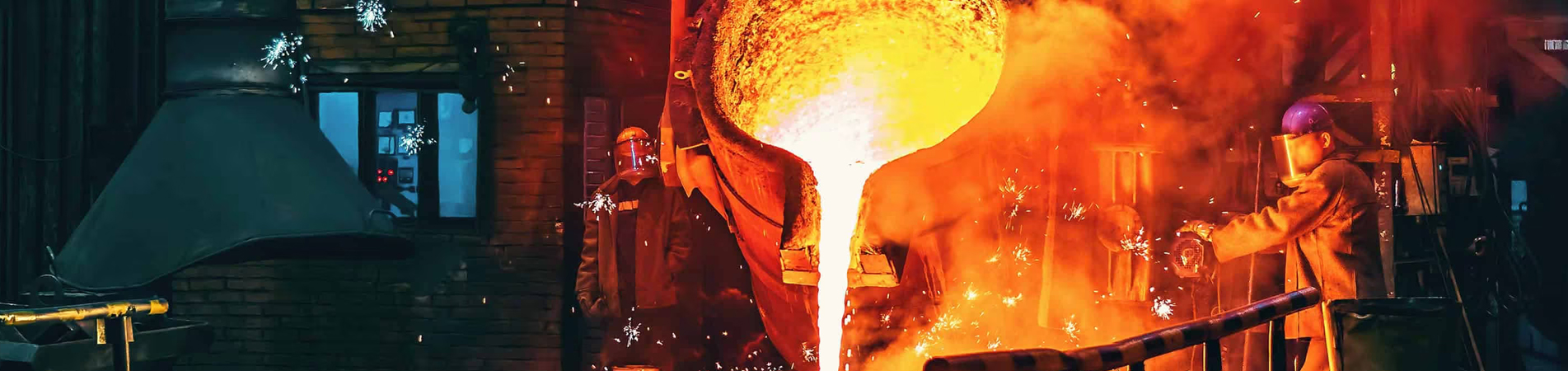
A glass production line does not expose every cable and service line to the same temperature. A sensor lead beside a furnace casing, a control cable routed along a forehearth support and a hose near a forming machine can experience very different thermal conditions, even when they belong to the same production line.
A silica sleeve for glass manufacturing can be considered for suitable cables, sensor leads, hoses and tubing routed near high-temperature equipment. The purpose is to add a flexible textile barrier around the component that needs protection. The sleeve must be selected for the actual location and installation, not simply from the temperature inside the glass-melting furnace.
BSTFLEX supplies braided and texturized products within its silica sleeve range. For glass-plant projects, the useful starting point is a drawing or photograph showing the protected component, its route and the nearby heat source.
Where Thermal Exposure Changes Along a Glass Production Line
Glass manufacturing includes several connected process areas. The equipment layout, operating cycle and distance from hot surfaces determine where a protective sleeve may be useful.
| Process Area | Components That May Need Review | Selection Concern |
|---|---|---|
| Melting furnace exterior | Sensor cables, instrument leads and external service lines | Radiant heat from hot casing, openings and nearby structures |
| Forehearth | Temperature instrumentation, control wiring and selected service lines | Continuous local heat and limited routing space |
| Feeder and gob delivery area | Sensor wiring, actuator lines and equipment connections | Heat exposure combined with movement and maintenance access |
| Forming machines | Control cables, hydraulic or pneumatic hoses and sensor leads | Vibration, repeated movement and nearby hot components |
| Annealing lehr | Drive-area wiring, sensors and service connections | Changing temperatures along the heating, soaking and cooling zones |
| Inspection and transfer equipment | Electrical lines and selected pneumatic or hydraulic connections | Local heat, glass dust, fragments and mechanical contact |
This is why a single specification for "glass furnace heat" is rarely enough. Identify the equipment tag and the exact section of the cable, hose or tube that needs protection.
Furnace Exterior: Protect the Service Route, Not the Glass-Melting Process
In a melting-furnace area, the relevant sleeve application is normally outside the process enclosure: around a sensor lead, control cable or suitable service line routed near a hot casing, inspection opening or heated support.
The temperature inside the furnace is not automatically the temperature experienced by a cable outside it. The local surface temperature, distance, line of sight, shielding and air movement all affect the thermal load at the sleeve location.
For that reason, a glass furnace cable protection sleeve should be specified using the actual cable route and its local exposure. Do not select a product solely because the furnace has a high process-temperature setting.
Forehearth Instrumentation Needs Stable Cable Routing
Forehearth systems control the thermal condition of glass before it reaches the forming process. Temperature sensors and associated wiring are positioned around equipment where local heat can remain elevated during production.
A forehearth instrumentation cable protection requirement should identify which section of the sensor or control cable is exposed. The sensing element, connection head, extension wire and cable entering a cooler tray may all have different temperature limits.
When a silica sleeve is considered, record the finished cable diameter, connector dimensions, protected length and the temperature limit of the cable itself. The sleeve is an external thermal barrier; it does not replace the cable's electrical insulation specification.
For detailed thermocouple routing and connector considerations, see the furnace cable and thermocouple protection guide.
Feeder and Forming Equipment: Account for Movement
Near feeders and forming machines, a cable or hose may be exposed to heat while also moving with an actuator, mechanism or machine assembly. A sleeve that fits a stationary sample may bunch, stretch or shift when the equipment moves.
For these locations, check the complete movement path rather than only the parked position. Pay particular attention to:
- The minimum bend radius of the protected cable or hose.
- The direction and frequency of movement.
- Clamps, brackets and support points.
- Areas where the sleeve could rub against surrounding metal.
- The clearance available around the moving assembly.
- The locations that must remain accessible for adjustment or inspection.
A high-temperature textile rating does not establish flex-cycle life or abrasion resistance for every machine arrangement. Those requirements should be evaluated separately.
Annealing Lehrs Have a Different Temperature Profile
An annealing lehr is not one uniform-temperature space. The product moves through heating, controlled cooling and further cooling zones. External equipment and service routes can therefore experience different conditions along the length of the lehr.
A silica sleeve for annealing lehr cable protection should be considered only for the sections where the local thermal exposure justifies it. A cable near a hot entry section may have a different requirement from a cable routed beside a cooler discharge section.
Map the cable route against the equipment layout. If only one section passes close to a hot surface, localized protection may be more practical than covering the entire cable run.
Glass Plant Hose and Tubing Protection
Glass-production equipment may use hydraulic and pneumatic systems for machine movement, positioning and auxiliary operations. Hoses and small-bore tubing can pass close to heated structures even when the fluid inside is not particularly hot.
A glass plant hose heat protection sleeve can be evaluated where external radiant or ambient heat is the concern. The sleeve should be sized around the actual hose or tube, not around the nearby furnace or pipe.
For an assembled hose, record both the hose outside diameter and the largest ferrule or fitting that the sleeve must pass over. If the sleeve is installed before the fitting is assembled, state that sequence in the drawing.
Oil, hydraulic fluid, cleaning chemicals and moisture are separate environmental considerations. Plain silica textile should not automatically be treated as a liquid-tight or chemical-resistant covering. Identify any expected fluid contact before approving the construction.
Glass Dust, Cullet and Mechanical Contact Are Separate Hazards
Glass plants can contain dust, cullet fragments and sharp edges around transfer and handling equipment. A silica sleeve selected for thermal protection should not automatically be treated as a heavy-duty abrasion guard or a cut-resistant cover.
Where a sleeved line passes a sharp bracket, moving guide or debris path, review the mechanical contact separately. Rerouting, a suitable support or an additional mechanical protection layer may be needed. Do not assume that a high-temperature fiber construction resolves every hazard in the area.
Likewise, direct contact with molten glass or hot glass fragments is not established by a general silica-fiber temperature rating. If direct molten-glass contact or splash is part of the duty, it requires a separately specified and validated protection system.
Choose the Sleeve Construction for the Installed Geometry
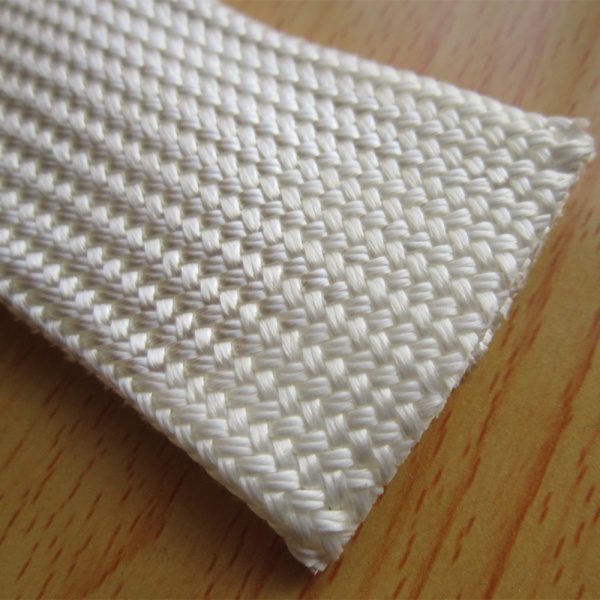
The two BSTFLEX product constructions provide different starting points for evaluation. The terms used to describe them refer to different aspects of textile design: braided describes how the sleeve is formed, while texturized describes the yarn structure. They should not be treated as mutually exclusive material categories or as automatic proof of one construction's superior insulation performance.
Braided Silica Sleeve
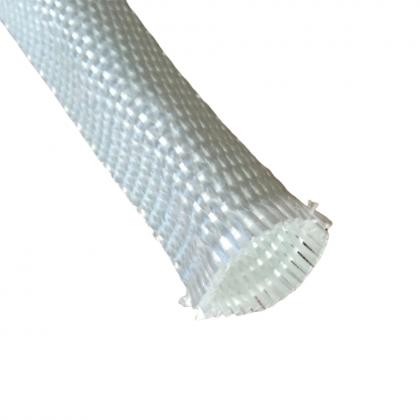
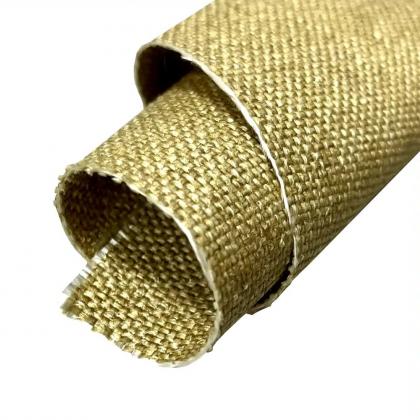
The High Temperature Resistant Braided Silica Sleeve is a starting point for suitable cables, hoses, wires and tubing where a flexible tubular construction is required.
For a glass-plant installation, evaluate the actual inside diameter, braid expansion, installed length, connector pass-over and clearance through bends. Do not assume that a sleeve can expand over every fitting without changing its coverage or textile geometry.
Texturized Silica Sleeve
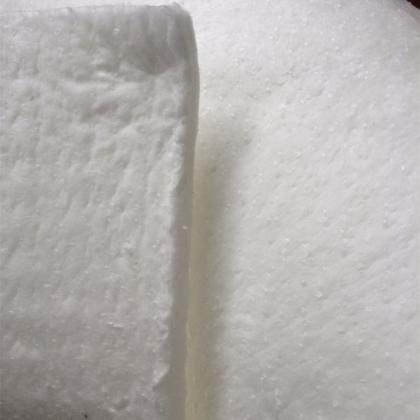
The Heat Insulation Texturized Silica Sleeve is another construction to consider where the required textile structure and available installation space make it suitable.
Compare the actual product dimensions and construction on the intended component. A bulkier-looking sample does not by itself establish a lower protected-component temperature. That result must be evaluated under the relevant installation and heat-exposure conditions.
Measure the Temperature at the Sleeve Location
For glass-furnace applications, the furnace process temperature is often the least useful single number for selecting an external cable or hose sleeve. The more relevant information is the thermal condition where the protected component is installed.
| Information | Why It Matters |
|---|---|
| Local surface temperature | Identifies the temperature of the nearby hot structure. |
| Local ambient temperature | Shows the surrounding air condition during operation. |
| Distance from the hot surface | Helps describe radiant exposure and available clearance. |
| Exposure duration | Separates continuous duty from short operating peaks. |
| Protected-component temperature limit | Defines the temperature the cable, hose or tube must remain within. |
| Air movement and shielding | Can change the heat reaching the installed sleeve. |
Keep maximum material temperature separate from the operating temperature of the protected component. The sleeve may remain intact while the cable or hose underneath exceeds its own limit.
For further temperature-selection guidance, see What Temperature Can a Silica Sleeve Withstand?.
Plan the Protected Length Around the Process Route
In a glass plant, a service line may pass through a short high-temperature zone and then continue into a cooler area. The sleeve length should follow the actual exposed section and the installation drawing.
For each protected section, identify:
- The start and end points on the equipment drawing.
- The component section that requires coverage.
- The distance to nearby hot surfaces.
- The location of connectors, clamps and inspection points.
- Whether the component moves during normal operation.
- Whether the sleeve must be removed for routine maintenance.
Do not cover identification marks, inspection points or connections that must remain visible unless the maintenance and engineering teams have approved the arrangement.
Sample Evaluation on the Actual Glass-Plant Assembly
Before releasing a production order, evaluate a representative sleeve on the intended cable, hose or tube. The sample review should establish both physical fit and the required thermal result.
A useful trial record includes:
- Product construction and approved sample identification.
- Component outside diameter and largest connector or fitting dimension.
- Free-state sleeve dimensions and supplied length.
- Installed coverage and finished outside diameter.
- Fit around bends, clamps and moving sections.
- End condition and retention arrangement.
- Temperature at the protected component during representative operation, where thermal validation is required.
- Inspection access and condition after the agreed operating cycle.
A dimensional fit check does not by itself prove thermal performance. Where the cable or hose operates close to its allowable temperature, test the complete installed arrangement under representative conditions.
Information to Include in a Glass-Plant RFQ
| RFQ Item | Information to Provide |
|---|---|
| Process area | Melting furnace, forehearth, feeder, forming machine, annealing lehr or other equipment. |
| Protected component | Sensor cable, thermocouple lead, control wire, hose, pneumatic line or tubing. |
| Component dimensions | Actual outside diameter and largest connector or fitting dimension. |
| Required coverage | Protected length and start/end points on the drawing. |
| Thermal exposure | Local surface and ambient temperatures, normal duty, peak condition and duration. |
| Installation | Static or moving, bend radius, supports, clearance and installation sequence. |
| Environment | Glass dust, cullet, abrasion, oil, moisture or cleaning-fluid exposure, as applicable. |
| Supply requirement | Continuous length or cut pieces, quantity, packaging and identification. |
| Validation | Sample quantity, fit-check method and any application-specific acceptance criteria. |
Silica Sleeve Supply for Glass Manufacturing Equipment
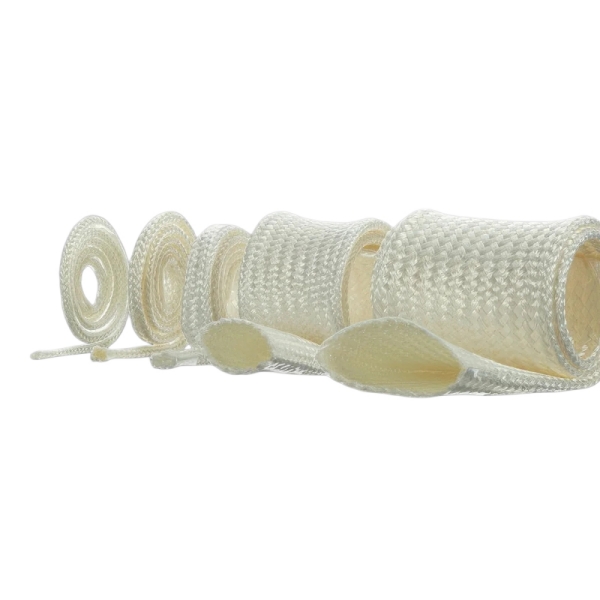
BSTFLEX supplies silica sleeve products for selected high-temperature component-protection applications. The silica sleeve category provides access to braided and texturized constructions for review against the actual assembly.
For glass-plant projects, send the equipment area, component drawing, outside diameter, required coverage, local heat conditions and quantity. Where the route includes movement or restricted access, include photographs showing the installed position.
Request a Silica Sleeve Quote for Glass-Plant Equipment
Frequently Asked Questions
Can silica sleeve be used in glass manufacturing plants?
It can be considered for suitable cables, sensor leads, hoses and tubing routed near hot glass-production equipment. The actual installation location, component temperature limit, sleeve construction and environmental conditions should be reviewed before selection.
Can silica sleeve protect cables near a glass furnace?
Yes, it can be evaluated as an external thermal barrier around suitable cables routed near the furnace exterior, hot casing or associated equipment. Use the temperature at the cable location rather than the internal furnace temperature alone.
Can silica sleeving be used around forehearth instrumentation?
It can be considered for suitable sensor and instrumentation cable sections exposed to local heat. Confirm the cable outside diameter, connector size, protected length and allowable cable temperature.
Is silica sleeve suitable for annealing lehr equipment?
It may be suitable for selected cables, sensor leads and service lines near hot sections of an annealing lehr. Conditions vary along the process, so identify the exact route and local thermal exposure before choosing a construction.
Can silica sleeve protect hydraulic or pneumatic hoses near forming machines?
It can be evaluated where external heat is the concern. Hose outside diameter, fittings, movement, bend radius, fluid exposure and abrasion conditions should be included in the specification.
Does a silica sleeve protect against direct molten-glass contact?
A general high-temperature rating does not establish suitability for direct molten-glass contact or splash. Such exposure requires a separately specified and validated protection system.
Does silica sleeve also provide abrasion protection against glass fragments?
Thermal resistance does not automatically establish cut or abrasion resistance. Where glass fragments, sharp edges or repeated rubbing are present, evaluate mechanical protection separately.
How do I choose between braided and texturized silica sleeve?
Compare the actual product construction, diameter, installed wall, flexibility, clearance and operating conditions. Braided describes the sleeve-forming method, while texturized describes yarn structure; the terms are not mutually exclusive.
What information should I send for a glass-plant quotation?
Provide the process area, protected component, outside diameter, connector dimensions, required coverage, local temperature, exposure duration, movement conditions, environmental hazards and order quantity. A drawing or installation photograph is useful for non-standard routes.


 Network IPv6 compatible con